Nightmare Mode and the Big Lie You Tell Yourself Every Single Time

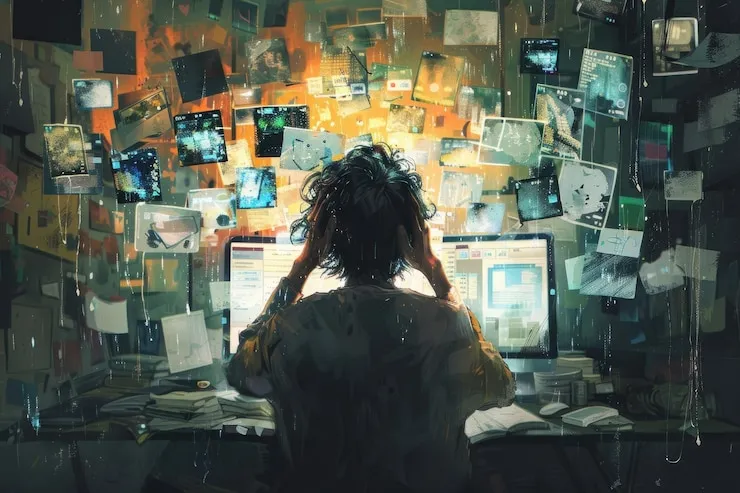
Photo: frustrated gamer staring at screen controller in hand dramatic lighting, via thumbs.dreamstime.com
There is a moment — a beautiful, delusional, completely unhinged moment — that happens to every gamer. You install something new. The difficulty selection screen appears. Your cursor drifts past 'Normal' like it's a bad neighborhood. It floats right past 'Hard' without so much as blinking. And then it lands on 'Nightmare,' or 'Legendary,' or 'Death Wish,' or whatever the developers named the mode they designed specifically to make you cry.
You click it. You feel powerful.
You will not feel powerful for long.
The Confidence Gap Is Real and It Is Enormous
Here's the thing nobody tells you about difficulty selection: it's less about your actual skill level and more about the version of yourself you believe exists somewhere inside you — the gamer you were during your peak Mountain Dew-fueled teenage years, the one who 100-percented everything without breaking a sweat. That guy is gone. He has been gone for a while. But when you're standing at the difficulty screen, you remember him vividly.
Psychologists actually have a name for this kind of thinking. It's related to what they call "optimism bias" — the deeply human tendency to believe we're better at things than the evidence suggests. Apply that to gaming and you get a very specific flavor of delusion: the unshakeable conviction that this time, on this game, you will absolutely destroy Nightmare difficulty and emerge victorious and slightly smug.
Spoiler: the average player who selects the highest difficulty on their first run quits within the first hour. Some studies on player behavior in games with difficulty telemetry — like FromSoftware's notoriously brutal catalog — show that a significant chunk of players who bump up to maximum difficulty on day one quietly restart on a lower setting within 30 minutes. They don't announce this. They simply do it in silence, like a person who ordered the spiciest item on the menu and is now discreetly asking for milk.
The Anatomy of a Ragequit (A Timeline)
Let's walk through what actually happens, minute by minute, because it follows a pattern so consistent it might as well be a genre.
0:00 — The Selection. You pick Nightmare. You feel great. You are a serious gamer.
0:01 – 5:00 — The Tutorial Phase. Everything seems manageable. You're breezing through the opening. "This isn't so bad," you say out loud, to no one.
5:01 – 12:00 — The First Real Enemy. Something hits you. It hits you hard. You die. You respawn. You die again. You start paying attention.
12:01 – 18:00 — The Bargaining. You start noticing the enemy patterns. You're learning. You're adapting. You're basically a professional. You die fourteen more times.
18:01 – 22:00 — The Unraveling. A single enemy — maybe a mid-tier grunt, maybe a boss, maybe literally just a door with spikes — kills you so many times in a row that something in your brain quietly snaps. You put the controller down. You pick it back up. You put it down again.
22:30 — The Descent. You go back to the main menu. You change the difficulty to Normal. You tell yourself it was the right call. You don't tell anyone else.
Why We Do It Anyway (And Keep Doing It)
Here's the part where FlyZap gets a little philosophical on you, because this isn't just about games — it's about identity.
Choosing a hard difficulty isn't really about gameplay. It's a statement. It's you declaring, before you've played a single frame, that you are the kind of person who doesn't take the easy path. That you have grit. That you are not, under any circumstances, a 'Normal' mode person. Normal mode is for people who just want to experience the story. And sure, maybe that's valid, but you are different.
Except you're not different. You're exactly the same as everyone else who clicked Nightmare, and the developers knew you were coming. They've been watching the telemetry data for years. They know the drop-off rates. They've seen the graphs. Somewhere in a game studio in California or Tokyo or Austin, a designer looked at those numbers and smiled the smile of someone who has seen this movie before.
The weird, almost beautiful part? Knowing all this doesn't stop anyone from doing it. You will finish this article, fire up something new, and still hover over the highest difficulty option. The self-awareness does nothing. The ego is bulletproof.
The Shame Spiral (And Why It's Actually Fine)
Let's talk about what happens after the quiet difficulty switch, because that part matters too.
For a lot of players, there's a genuine sting of embarrassment — even when no one else is watching. Gaming is deeply tied to identity in American culture, especially for people who grew up with it. Calling yourself a gamer and then immediately bailing on Nightmare mode feels like a contradiction, like a marathon runner who drives the last six miles.
But here's the actual truth: the players who switch difficulty mid-game and keep playing are making a smarter choice than the ones who quit entirely out of stubbornness. Finishing a game on Normal beats never finishing it on Nightmare. The experience is what matters, not the badge of suffering you endured to get there.
The real losers in this equation? The people who choose Nightmare, die repeatedly, and then just... stop playing. They don't lower the difficulty. They don't come back. The game sits in their library, unfinished, a tiny monument to overconfidence. According to various completion-rate trackers, a huge portion of purchased games never get finished at all, and difficulty is one of the most cited reasons for abandonment.
So in a twisted way, the person who swallows their pride and drops to Easy is winning. They're the one who actually gets to see the ending.
The Eternal Return of the Difficulty Screen
None of this will change your behavior. That's the final, honest conclusion here. The next time a difficulty screen appears in front of you, your cursor is going to drift upward. You're going to remember the gamer you used to be, or the gamer you believe yourself to be, and you're going to make the same call.
And maybe that's okay. Maybe the ritual of choosing Nightmare, suffering briefly, and recalibrating is just part of how we engage with games — a tiny, recurring drama of ambition and reality that plays out every time something new hits the market.
Or maybe you'll finally stick it out this time. Maybe this is the run where you actually clear Nightmare mode and prove all of us wrong.
We're rooting for you. We really are.
We'll see you back at the difficulty screen in twenty minutes.