Confessions of a Digital Hoarder: The Shameful Truth About Games You'll Never Launch
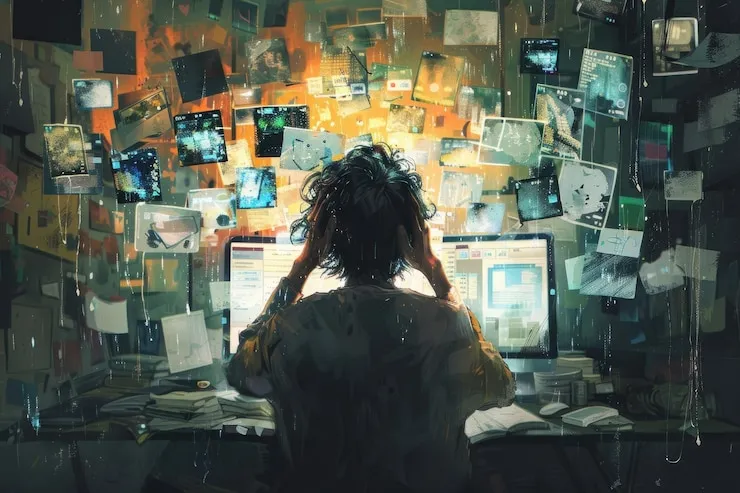
Photo: person overwhelmed by digital game library on computer screen, via img.freepik.com
Somewhere on your hard drive — or more accurately, somewhere on a server farm you'll never visit — there is a copy of a game you bought in 2019 during a Steam Summer Sale for $2.49. You told yourself it looked interesting. You told yourself you'd "get to it eventually." You have not gotten to it. You will not get to it. And yet, somehow, this does not stop you from buying three more games next Tuesday when the next sale drops.
Welcome to the Great Game Abandonment. Pull up a chair. There are hundreds of millions of us.
The Library That Ate Itself
Let's establish some scale here, because the numbers are genuinely unhinged. Steam, Valve's beloved digital storefront and enabler of bad decisions, hosts over 50,000 games. The average Steam user owns somewhere between 100 and 200 titles. A significant chunk of those users own way more than that, quietly accumulating digital shelf dust on games that will never see so much as a loading screen.
Game Pass has made this even worse — or better, depending on how you feel about chaos. Microsoft's subscription service dumps hundreds of titles into your lap for a monthly fee, creating what gaming psychologist Dr. Rachel Kowert describes as a "buffet problem." When everything is available, nothing feels urgent. You'll have the digital equivalent of piling your plate sky-high at Golden Corral and then mostly just eating the rolls.
Mobile gaming is the real villain, though. The App Store and Google Play have trained a generation of people to download games like they're collecting baseball cards, except baseball cards didn't drain your battery and beg you to spend $4.99 on a gem pack. The average person has downloaded somewhere north of 60 apps they no longer use. A disturbing number of those are games with names like "Merge Castle Kingdom Warriors 3D."
The Psychology of the Pile
So why do we do this? Why do otherwise rational adults — people who comparison-shop groceries and agonize over Netflix subscription costs — gleefully toss $15 at a game they'll never open?
The short answer: our brains are broken. The longer answer is more interesting.
FOMO — Fear of Missing Out — is the obvious culprit. When a game goes on sale, your brain doesn't process it as "opportunity to play this game." It processes it as "opportunity to avoid losing access to this game forever." You're not buying a game. You're buying the possibility of playing it. That possibility feels genuinely good. It's wish fulfillment with a price tag.
"There's real psychological satisfaction in acquisition itself," says one gaming behavior researcher who asked to remain anonymous because, in their words, "I've bought like forty games I haven't played either and I'd like to keep my credibility." "The act of purchasing scratches the same itch as actually engaging with the content. For a few minutes, you feel like a person who plays that kind of game."
That last part is key. Buying Disco Elysium doesn't just mean you own Disco Elysium. It means you are, in some aspirational sense, the kind of sophisticated, thoughtful gamer who plays Disco Elysium. Never mind that your actual gaming diet consists entirely of sports titles and whatever your friends are playing on Discord. The purchase is an identity statement.
The Sale Industrial Complex
Game publishers and storefronts have figured all of this out, by the way. They figured it out years ago, and they are not sorry.
Steam Sales are practically national holidays at this point — the Summer Sale, the Winter Sale, the Autumn Sale, the completely made-up "Midweek Madness" that happens every single week because why not. Each one is engineered to create artificial urgency. Countdown timers. "Daily Deals" that reset every 24 hours. Wishlist notifications that ping your phone the moment a game you forgot you wanted drops to 75% off.
Game Pass operates on a different but equally devious mechanic: the fear of removal. Games leave the service regularly, which means you're constantly downloading titles you have no intention of playing right now but might want to play before they disappear. Your Xbox hard drive becomes a panic room stocked for an emergency that never comes.
"I have literally downloaded a game, left it sitting there for four months, watched it leave Game Pass, and then bought it on sale because I still wanted to play it someday," confessed Marcus, a 34-year-old IT professional from Columbus, Ohio, who has asked us not to use his last name because his wife reads this website. "I have never played it. I own it now. It sits in my library. We don't talk about it."
The Ritual of the Backlog
Here's the truly wild part: most of us know this is happening. We are not delusional. We maintain wishlists, we track our backlogs on websites like HowLongToBeat, we calculate how many lifetimes it would take to finish everything we've purchased. (The answer is always several. The answer is always several lifetimes.)
And then we buy another game.
There's something almost meditative about the backlog. It exists as a standing promise to a future version of yourself — a version who has more free time, fewer responsibilities, and somehow the energy to finally do a completionist run of a 90-hour JRPG. That future self is a fiction, but it's a comforting one.
The backlog is also, weirdly, a form of optimism. Every unplayed game is a tiny bet on the future. It says: I believe there will be a tomorrow in which I have leisure time and this game will bring me joy. That's not pathetic. That's almost sweet.
Almost.
How to Stop (Or At Least Slow Down)
A few brave souls have tried to institute rules. The "one in, one out" policy — finish a game before buying another — sounds great in theory and lasts approximately until the next Humble Bundle drops. Some people have gone cold turkey on sales entirely, which requires a level of willpower usually reserved for dietary restrictions and not texting your ex.
The most sustainable approach, according to people who study this stuff, is to treat your backlog like a to-read list: accept that it will always be longer than you can finish, curate it with actual intention, and stop feeling guilty about the rest. You're not obligated to play every game you own. You're allowed to buy something because it looks interesting and then change your mind. That's legal. That's fine.
What you probably shouldn't do is spend another $47 during the next Steam Sale on games you selected by sorting by "overwhelmingly positive reviews" and clicking until your wallet cried.
But you're going to do that anyway. We all are. See you in the support group.