Your Backlog Is a Graveyard and You Built Every Tombstone
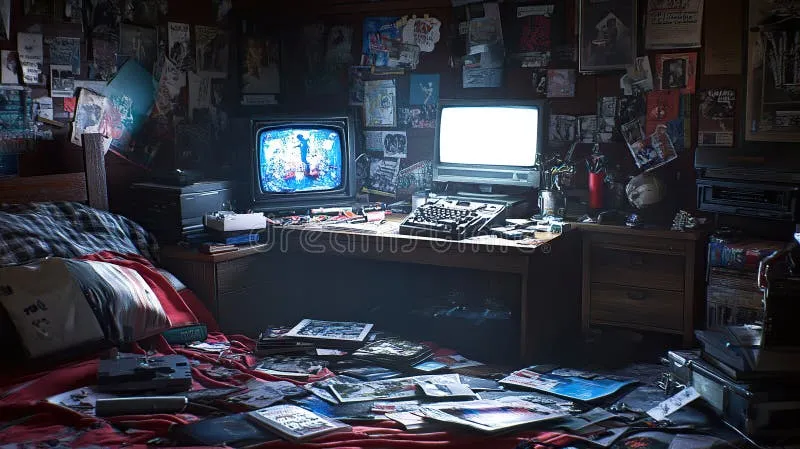
Photo: messy desk with multiple video game cases stacked pile disorganized gamer room, via thumbs.dreamstime.com
Somewhere on your hard drive, there is a game you bought during the 2021 Steam Summer Sale for $2.49. You added it to your library with the enthusiasm of a golden retriever spotting a tennis ball. You have never once opened it. You never will. And yet — and yet — some stubborn corner of your brain still whispers, "Maybe this weekend."
Welcome to the Great Game Abandonment, the defining psychological condition of the modern gamer. It's not laziness. It's not indifference. It is something far more complicated, far more human, and honestly? Way funnier when you look at it from the outside.
The Library That Ate Your Self-Esteem
Let's get the numbers out of the way first, because they are absolutely unhinged. According to various Steam user surveys and third-party tracking tools, the average Steam user has completed fewer than 30% of the games in their library. For heavy collectors — the folks with 500-plus titles — that completion rate nosedives toward single digits. There are people walking around with libraries the size of a small Blockbuster who have genuinely played maybe enough titles to fill a shoebox.
This isn't exclusive to PC gaming, either. PlayStation's trophy system essentially gamifies the act of not finishing games by letting you see exactly how many people started a title and then quietly evaporated before the second chapter. Sometimes that number is 60%. Sometimes it's 80%. Sometimes you look at a game's trophy data and realize you're one of eleven people on Earth who saw the ending.
So what is actually going on here?
Dopamine Doesn't Care About Your To-Do List
Here's the uncomfortable truth: buying a game and playing a game scratch almost entirely different itches. The purchase is its own reward. The moment you click "Add to Cart" during a Steam sale, your brain fires off a little celebration — a tiny hit of anticipation-flavored dopamine that has almost nothing to do with the 40-hour RPG you just theoretically committed to.
Psychologists call this "retail therapy" when it happens with shoes. When it happens with games, we call it "building a library" because that sounds more dignified. But the mechanics are identical. You're not really buying a game. You're buying the possibility of an experience. The future version of yourself who will absolutely, definitely have a free Tuesday afternoon and the mental bandwidth to learn a new crafting system.
Spotify Wrapped exists. We all know what our listening habits actually look like. Imagine if Steam did the same thing — a cheerful annual recap of every game you bought with the best of intentions and abandoned before the tutorial finished loading. It would be devastating. It would also get approximately 40 million shares because misery loves company.
FOMO Has a Shopping Cart Now
The modern gaming ecosystem didn't invent the backlog, but it absolutely turbocharged it. Flash sales. Limited-time bundles. Humble Bundle's "pay what you want" model, which turned acquiring 15 games at once into something that felt practically responsible. The gaming industry figured out early that scarcity — even artificial scarcity — makes humans do extremely impulsive things with their wallets.
The fear of missing out isn't just about social experiences anymore. It's about missing the window to own something at a price that feels like stealing. "It's 90% off" is a sentence that has caused more unplayed game accumulation than any other force in human history. You don't even need to want the game. You just need to not want to pay full price for it later, theoretically, in a future where you suddenly develop a passionate interest in a 2009 city-builder.
Books and movies don't quite do this to us with the same ferocity. A book sits on your shelf looking slightly judgmental. A streaming movie just... exists in the void until you forget it's there. But a game library is a living, growing monument to every version of yourself you intended to become. The one who would finally get into strategy games. The one who would 100% a platformer. The one who had time for a 90-hour JRPG.
The Completionist's Curse (and Everyone Else's)
There's a fascinating split in the gaming population between completionists — people pathologically driven to see every ending, find every collectible, and squeeze every achievement out of a title — and everyone else, who operate on a much more chaotic "vibe-based" relationship with their libraries.
Completionists often have smaller libraries because the psychological weight of an unfinished game is physically painful to them. They cannot move on. They will not move on. Meanwhile, the average gamer has developed a remarkable ability to emotionally detach from their digital graveyard, treating each unplayed title as a kind of potential energy — not wasted, just... stored.
"I'll get to it" is the most optimistic sentence in the English language. It assumes a future with free time, sustained motivation, and a gaming mood that perfectly aligns with whatever genre you impulse-bought at 1 AM. Statistically, that future arrives less often than we'd like.
So Are We All Just Broken?
Here's the part where we're supposed to offer a fix. A system. A "how to actually play your backlog" listicle with numbered steps and a satisfying conclusion.
We're not going to do that.
Because honestly? The backlog might be fine. Maybe the act of collecting experiences — even unplayed ones — is its own legitimate form of cultural participation. Maybe owning a weird indie puzzle game you found at 2 AM says something true about who you are, even if you never boot it up. Maybe the library is less a to-do list and more a self-portrait.
Or maybe you just really like Steam sales and you should make peace with that.
Either way, your backlog isn't going anywhere. Neither are those 847 games. And somewhere in there, buried under a pile of unplayed survival crafters and forgotten visual novels, is a game that will genuinely blow your mind — if you ever actually launch it.
No pressure. It'll still be there next weekend.