Hands Off the Controller, Brain Still On Fire: The Agony of Watching Someone Else Game
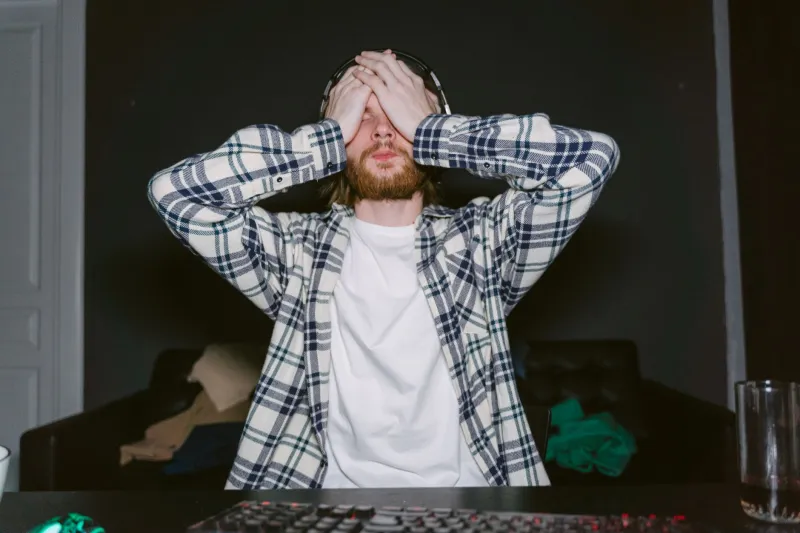
You are completely relaxed. You have snacks. You have a beverage. You are wearing comfortable pants. There is no reason — zero, none, absolutely zilch — for your blood pressure to be doing what it is currently doing.
And yet.
The streamer on your screen just walked right past the glowing chest. The glowing chest. The one with the pulsing golden aura and the dramatic orchestral swell. They kept moving. They are now talking to chat about their weekend plans. You are gripping your throw pillow like it owes you money.
Welcome to spectator gaming, the hobby that somehow managed to be more exhausting than the thing it replaced.
Your Brain Doesn't Know You're Not Playing
Here's the dirty little secret that neuroscience keeps trying to tell us: your brain is kind of bad at distinguishing between doing something and watching someone else do it. Mirror neurons — the little neural troublemakers responsible for empathy and imitation — fire in eerily similar patterns whether you're the one holding the controller or just watching someone else hold it.
This is why you flinch when someone on screen takes a hit. It's why your hands tense up during a boss fight you have absolutely no stake in. Your nervous system received the memo that this is a viewing experience; it just decided not to read it.
So when that streamer with 80,000 subscribers confidently walks into a room that is clearly a trap — the kind of room with ominous music, suspiciously symmetrical architecture, and a save point right outside the door — your amygdala is already in full panic mode. Because somewhere deep in your lizard brain, this is happening to you.
The Backseat Gaming Impulse Is Basically Unstoppable
There's a specific, almost physical sensation that arrives when you're watching someone play badly. It starts in your chest. It migrates to your jaw. Eventually it exits your body as a noise that is somewhere between a groan and a word that would get you banned from most family-friendly platforms.
Psychologists call this kind of reaction a control deprivation response — the frustration that emerges when you can see a clear solution but have no mechanism to implement it. Backseat gaming isn't just an annoying habit. It's your brain desperately trying to resolve a tension it created by paying attention in the first place.
The chat box doesn't help. Watching 4,000 people simultaneously type "GO LEFT" at a streamer who cannot hear them through the screen is one of the most beautifully futile experiences the internet has produced. It's like shouting at a painting. The painting will not change. You will keep shouting.
The Particular Torture of the Obvious Miss
Not all streaming stress is created equal. A close call in a boss fight? Thrilling. A near-death experience that somehow resolves in the streamer's favor? Cathartic. These are acceptable forms of tension.
But watching someone miss something obvious? That's a different category of suffering entirely.
There's a psychological concept called epistemic frustration — the discomfort of knowing something and being unable to communicate it effectively. It spikes hardest when the gap between your knowledge and someone else's action feels completely unnecessary. You're not frustrated because the game is hard. You're frustrated because the game is not hard and this person is somehow making it hard by ignoring every visual cue, audio prompt, and environmental hint the developers spent three years carefully designing.
Streaming culture has essentially industrialized this experience and figured out how to make millions of people pay for it. Which, honestly? Respect.
Vicarious Rage Has Its Own Flavor
Regular gaming rage — the kind where you personally fail and snap at the void — has a certain clean quality to it. You did a thing wrong. You are mad about it. The emotion has a logical origin point.
Vicarious gaming rage is weirder and, frankly, harder to shake. You didn't do anything wrong. You weren't even playing. And yet here you are, genuinely irritated at a person on the internet who is having a great time and absolutely does not need your emotional energy.
The disconnect is the problem. When you fail in a game, you can course-correct. You can try again. You have agency. When you're watching someone else fail, you have nothing except opinions and nowhere constructive to put them. The frustration has no outlet. It just marinates.
This is also why some people find it genuinely easier to watch streamers who are good at games rather than streamers who are entertainingly bad. The chaos-and-failure content model is hugely popular, but it comes with a psychological tax that not everyone wants to pay on a Tuesday evening.
Why We Watch Anyway (And Keep Watching)
Here's the part that should probably embarrass all of us: we know it's stressful, and we keep doing it.
Part of this is social. Streaming isn't just a delivery mechanism for gameplay — it's a communal experience. Watching a streamer play through a game you love is its own kind of nostalgia trip, a way of revisiting something familiar through someone else's fresh reaction. Watching them play something you haven't touched yet is low-stakes research with entertainment value baked in.
Part of it is also, let's be honest, control. You can close the tab. You can pause. You can skip ahead. In a weird way, watching someone else play gives you more structural control over the experience than actually playing does, even as it strips away the in-game control entirely. It's a trade-off your brain negotiates in real time, constantly, and not always successfully.
And part of it — the part nobody really wants to admit — is that the stress itself is kind of the point. Tension is engaging. Frustration keeps you watching to see if it resolves. The algorithm didn't accidentally figure this out.
The Couch Is Lying to You
So the next time you're sprawled out watching someone stream and you notice that your jaw is clenched, your snacks have gone untouched, and you've been muttering directions at a monitor for twenty minutes, just know: this is expected. This is normal. Your brain is working exactly as intended — it's just that "as intended" means treating a Twitch stream like a survival situation.
The couch is comfortable. The vibes are relaxed. Your nervous system did not get the memo, has not gotten the memo in years, and at this point is probably never getting the memo.
At least the chest with the glowing aura will still be there when they finally circle back around.
(They won't circle back around.)